
BAGS Greyhound Meetings
Best Greyhound Betting Sites – Bet on Greyhounds in 2026
Loading...
Contents
The Daytime Backbone of UK Greyhound Racing
If you’ve ever opened a betting app on a weekday afternoon and found a full card of greyhound racing waiting for you, you’ve encountered BAGS. These meetings form the majority of UK greyhound fixtures — the everyday racing that fills the schedule between the higher-profile evening and weekend cards. They’re where most betting money lands, where most casual punters place their bets, and where most of the sport’s turnover is generated.
BAGS stands for Bookmakers’ Afternoon Greyhound Service (operated through SIS), though the meetings now run from morning to late afternoon across multiple tracks. The name reflects the original purpose: providing a betting product for bookmakers to offer during the daytime hours when horse racing and evening greyhound fixtures aren’t available. That function hasn’t changed. What has evolved is the scale and regularity of BAGS racing, to the point where it accounts for the majority of UK greyhound meetings in any given week.
BAGS Explained: Schedule, Tracks, Purpose
BAGS meetings are contracted fixtures between licensed greyhound tracks and the major UK bookmakers. The tracks agree to stage racing at designated times, and the bookmakers agree to offer betting markets on those fixtures across their platforms. The arrangement benefits both sides: tracks receive guaranteed fixture fees and media revenue, while bookmakers get a steady stream of short-format events to populate their daytime betting offering.
The schedule typically runs from late morning through to early evening, with meetings staggered across multiple tracks so that races are available at regular intervals throughout the day. A typical BAGS card features ten to twelve races at a single track, with approximately twelve to fifteen minutes between events. On a busy weekday, five or six tracks might be running simultaneously, producing a race every two to three minutes somewhere in the country.
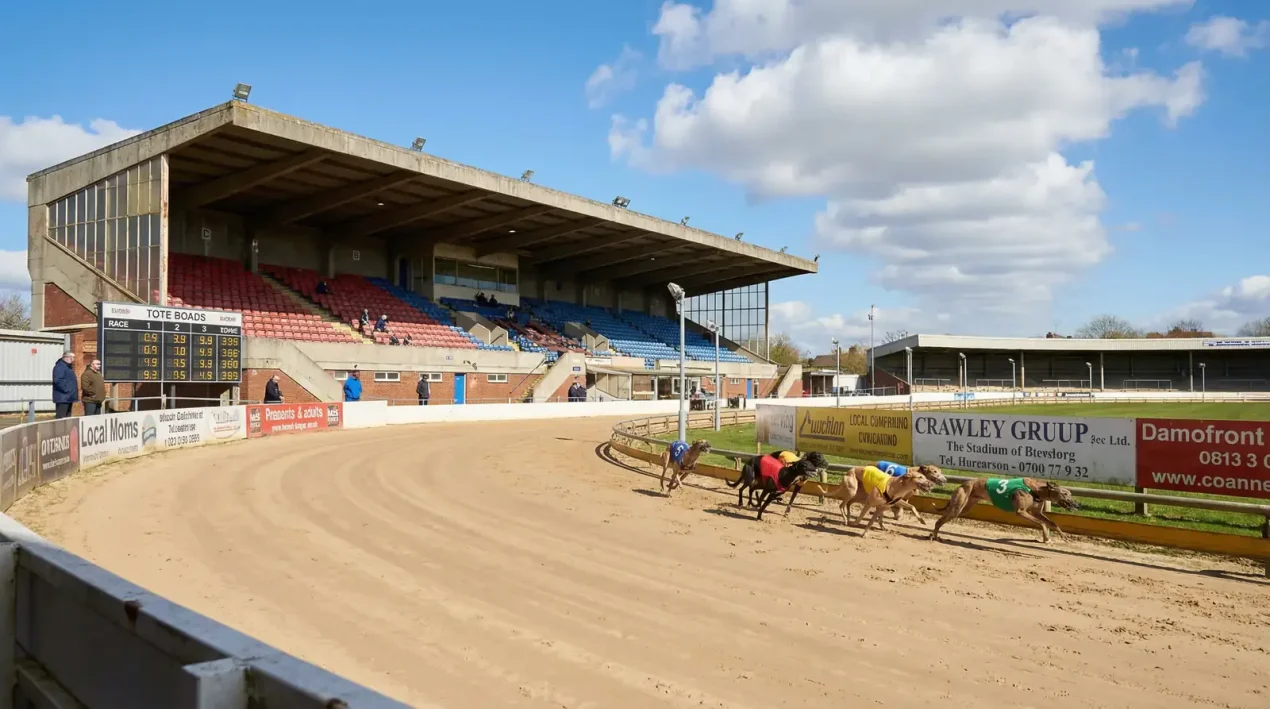
Most GBGB-licensed tracks participate in the BAGS contract to some degree. The specific tracks and times rotate, but regulars include Romford, Monmore Green, Sheffield, Sunderland, Perry Barr, Crayford and Hove, among others. The racing is graded in the same way as evening fixtures — A1 through A9 — and follows the same GBGB regulations on welfare, drug testing and race management. There’s no structural difference in how the dogs are graded or how the races are run. The differences lie in the field quality, the market dynamics, and the information available to punters.
How BAGS Racing Differs from Evening Racing
The most important difference between BAGS and evening meetings is field quality. Evening and weekend fixtures at major tracks tend to feature stronger graded races, open events, and occasionally feature competitions. BAGS meetings, by contrast, fill their cards from the available pool of dogs at a track, which often means middle-to-lower-grade fields without the standout runners that headline evening cards. This isn’t universally true — some BAGS fixtures produce competitive racing at decent grades — but as a general pattern, the quality ceiling is lower.
That quality difference affects betting in two ways. First, lower-grade races are inherently less predictable. The dogs are less consistent, form is less reliable as a guide, and the margin between the best and worst runner in a field is often smaller than in higher grades. This means favourites win less frequently in BAGS racing, which creates both opportunity and risk depending on your approach.
Second, the betting markets on BAGS meetings are thinner. Less money flows through the market, which means prices can be more volatile and less reflective of true probabilities. A single large bet from a confident punter can move a BAGS price significantly, whereas the same amount on an evening feature race would barely register. For punters who do their homework, this thinner market is an advantage — mispriced dogs are more common because the market efficiency that comes with higher liquidity is absent.
Information availability also differs. Evening meetings at major tracks often attract more media coverage, more form analysis from specialist tipsters, and more detailed race previews. BAGS meetings receive less attention, which means the punters who do study the form have a larger informational edge over the casual money that makes up a significant portion of BAGS turnover.
The pace of BAGS meetings is also worth noting. Races are staged every twelve to fifteen minutes across a card of ten to twelve events, and with multiple tracks running simultaneously, the temptation to bet on every race is relentless. This rapid-fire schedule suits the bookmaker more than the punter — it encourages impulsive betting and reduces the time available for careful analysis between races. The disciplined BAGS bettor resists the schedule and bets selectively, even if that means watching six races before finding one worth a stake.
Approaches Suited to BAGS Meetings
Specialisation matters more in BAGS betting than almost anywhere else in the sport. Because meetings run at multiple tracks simultaneously and the fixture list rotates, the punter who tries to follow every BAGS card will spread their attention too thin to develop any real edge. Instead, pick two or three tracks that regularly feature in the BAGS schedule and focus exclusively on those.
Track familiarity is the single biggest advantage in BAGS betting. Knowing the trap biases, understanding which grades produce the most predictable results, recognising regular dogs and their running styles, and having a calibrated sense of what constitutes fast or slow times at that venue — all of this compounds into an edge that generic form analysis can’t replicate. The punter who has watched fifty BAGS meetings at Romford knows things about that track that a form guide can’t capture.
Approach BAGS markets with slightly wider value thresholds than you’d apply to evening racing. Because the fields are less predictable and the form is less reliable, your selections will win at a lower strike rate, so the prices you take need to compensate. Backing a BAGS favourite at 6/4 is a lower-value proposition than backing an evening favourite at the same price, because the BAGS favourite’s win probability is typically lower despite the identical odds. Look for selections at 3/1 and above where your track-specific knowledge gives you a reason to believe the price underestimates the dog’s actual chance.
Forecast and tricast bets can be particularly productive on BAGS cards. The less predictable fields mean that forecast dividends are often larger than equivalent evening dividends, because outsiders fill the places more frequently. If you’re confident in identifying two or three contenders from a BAGS field of six, the forecast payouts can compensate for the lower individual strike rate.
BAGS Meetings Are Opportunities, Not Filler
The perception that BAGS racing is inferior or unworthy of serious attention works in favour of the punters who treat it seriously. Lower field quality doesn’t mean lower betting quality — it means different dynamics that reward a specific kind of preparation. The casual money that flows into BAGS markets creates pricing inefficiencies that more liquid evening markets iron out.
The volume of BAGS racing is itself an advantage. More meetings mean more data, more opportunities to apply your edge, and a larger sample over which to measure your results. Treat BAGS as the testing ground where your track knowledge, form analysis and discipline are applied daily, and the results will reflect that commitment.