
Greyhound Betting for Beginners UK
Best Greyhound Betting Sites – Bet on Greyhounds in 2026
Loading...
Contents
Your First Bet on the Dogs: What You Need to Know
Greyhound betting isn’t complicated — but it rewards those who take ten minutes to understand the basics before placing a stake. Unlike horse racing, which demands familiarity with trainers, jockeys, going and a dozen other variables, greyhound racing strips competition down to a simpler framework: six dogs, a mechanical hare, and a track that rarely changes its shape.
That simplicity is an advantage if you use it. The UK runs more than sixty GBGB-regulated meetings every week across licensed tracks from Romford to Towcester, covering mornings, afternoons and evenings. There’s no shortage of action. What newcomers often lack is not opportunity but a basic map of how races work, how odds are formed, and where the obvious traps lie — figuratively, not just literally.
This guide covers the essentials. Nothing more, nothing less. By the end, you’ll know enough to place an informed bet rather than a hopeful one, and that difference matters more than any single result.
How Greyhound Racing and Betting Works
Six dogs, one lure, one winner — the rest is detail, and that detail matters. Every GBGB race in the UK follows the same core structure. Dogs are loaded into numbered traps — one through six, each assigned a colour that stays consistent everywhere: red, blue, white, black, orange and striped (GBGB Rule 118). The mechanical hare travels around the outside rail, the traps spring open, and the dogs chase it over a set distance.
Distances vary by track but typically range from 210 metres for sprints to around 700 metres for staying races. Most UK greyhound racing happens over middle distances: 400 to 500 metres, which translates to roughly 25 to 30 seconds of actual running. That’s worth noting because it means small margins — a slow start, a bump at the first bend — can decide outcomes in ways that longer races sometimes forgive.
Greyhounds are graded by ability. The grading system runs from A1 at the top to A9 at the bottom, with open races reserved for the highest-quality fields. When a dog wins, it typically moves up a grade; when it finishes poorly, it may drop. This framework means that a six-runner field should, in theory, contain dogs of comparable standard. In practice, form, fitness and trap position create meaningful separations even within a single grade.
Betting works much the same as horse racing. Bookmakers offer fixed odds before the event, and a Starting Price is recorded at the moment traps open. You can back a dog to win, to place, or both through each-way bets. Forecasts predict the first two home, and tricasts predict the first three. The real difference from horses is the field size: six runners rather than ten, twelve or sixteen. That smaller field is simultaneously the reason greyhound racing appeals to beginners — fewer variables — and the reason value can be harder to find if you’re not looking carefully.
Each dog’s race card entry contains several key pieces of information: the trap number and colour, the dog’s name, its trainer, recent form figures, best recent time over the distance, and current weight. Trainer names matter because certain kennels are known for their preparation and strike rates, though this is knowledge that builds over time. Weight fluctuations between races can signal fitness changes — a dog that has gained a kilogram since its last run might not be in the same condition. And the form figures, usually shown as the last six finishing positions, tell you at a glance whether this dog has been competitive recently or just making up numbers.
Races are organised by the Greyhound Board of Great Britain (GBGB), the regulatory body responsible for licensing tracks, registering dogs and enforcing welfare standards. The calendar splits broadly into BAGS meetings — daytime fixtures contracted to the betting industry — and independent evening or weekend meetings run by the tracks themselves. BAGS racing dominates the volume, accounting for the majority of fixtures punters will encounter when they open a betting app on a Tuesday afternoon.
How to Place Your First Greyhound Bet Online
Creating an account takes two minutes. Losing money without preparation takes less. Before placing anything, choose a licensed UK bookmaker — one regulated by the UK Gambling Commission. All major operators offer greyhound markets, and most provide live streaming of UK races directly through their platforms, which means you can watch the dogs you’ve backed without needing a separate subscription.
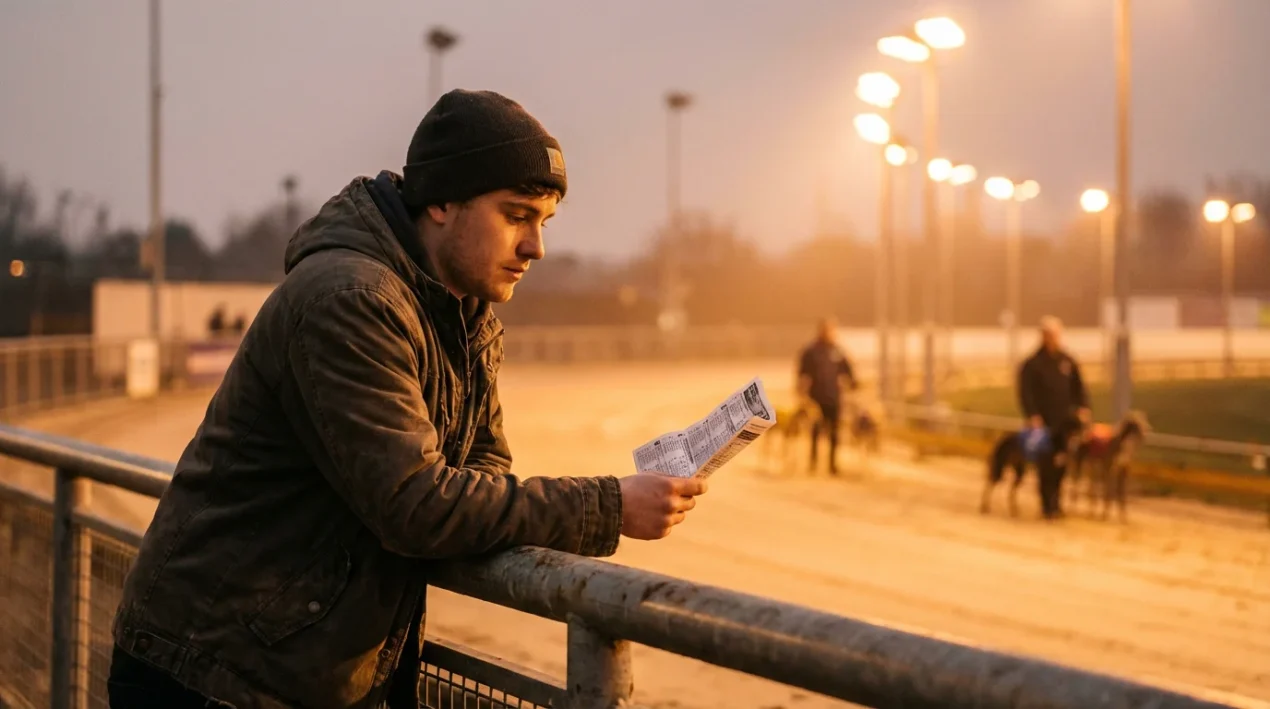
Once you’re registered and have deposited funds, navigating to greyhound racing is straightforward. Meetings are listed by track and time. Click into any race card and you’ll see six dogs with their trap numbers, recent form, trainer names and current odds. The form string — a sequence of numbers representing recent finishing positions — is the first thing to look at. A dog showing 1-2-1-3 has been competitive. One showing 6-5-6-4 has not, regardless of the story the name or the odds might tell.
To place a win bet, select the dog, enter your stake, and confirm. The slip will show your potential return at the current odds. If you want each-way, toggle that option before confirming — the bookmaker will split your stake into two bets: one on the win and one on the place. In a six-runner field, place usually means first or second, at a fraction of the win odds.
For forecast and tricast bets, most platforms offer a separate tab or selector within the race card. A straight forecast asks you to pick first and second in the correct order. A reverse forecast covers both possible orders, doubling your stake. Combination forecasts let you select three or more dogs and cover all possible first-second pairings between them, which escalates cost quickly. As a beginner, stick to win and each-way bets until you have a feel for how races unfold. The temptation to jump into forecasts for bigger payouts is understandable, but it’s also the fastest way to drain a new account.
One practical note: pay attention to the race time. Greyhound meetings run on tight schedules, with races going off roughly every twelve to fifteen minutes. If you’re still weighing up a bet when the market suspends, you’ve missed it. Decide before the two-minute window, not during it.
Five Practical Tips for New Greyhound Bettors
Start simple, stay disciplined, and learn one track before trying to master them all. That sentence is worth more than any tipster service, and here’s why it breaks down into five practical rules that will save you both money and frustration.
First, specialise early. UK greyhound racing spans around twenty GBGB-licensed tracks (GBGB licensed tracks), each with its own circuit dimensions, surface characteristics and trap biases. Romford is a tight, flat track with a 350-metre circumference and a 225-metre sprint distance. Towcester has a 420-metre circuit with wide, sweeping bends and a standard 480-metre middle distance. A dog that thrives at one may flounder at the other. Pick one or two tracks and learn them thoroughly — the trap bias data, the typical field quality, how races flow from the traps through the bends. This concentrated knowledge is worth more than a superficial understanding of every track on the calendar.
Second, read form before reading odds. It sounds obvious, but the temptation to scan the prices first and then justify your pick is real. Odds reflect market opinion, not objective truth. A 2/1 favourite is just the dog the majority of money has landed on — and the majority of recreational bettors don’t study form carefully. Look at recent finishing positions, sectional times where available, and the grade level of recent races. A dog dropping down from A3 to A4 may hold an advantage that the odds haven’t fully priced in.
Third, set a session budget and stick to it. This isn’t a vague suggestion about responsible gambling — it’s a structural decision that protects your long-term engagement. Decide before the first race how much you’re prepared to lose in a single sitting. When that amount is gone, stop. The dogs will still be running tomorrow. Chasing losses across the back end of a twelve-race card is the single most common way new punters accelerate their exit from the sport.
Fourth, watch races before you bet on them. If your bookmaker offers live streaming — and virtually all of them do for UK greyhounds — use it. Watch three or four races at a track without staking anything. See how dogs break from different traps. Notice which runners are caught wide on the first bend. Observe whether front-runners tend to hold their position or get caught in the home straight. This passive learning builds pattern recognition that no statistics page can replicate. When you then start betting, your selections will be informed by visual memory, not just numbers on a screen.
Fifth, record every bet. A simple spreadsheet is enough: date, track, race, dog, bet type, odds, stake, result. After a few weeks, you’ll have data. You’ll see which tracks you’re profitable at and which ones drain you. You’ll spot whether your each-way bets are earning their keep or just slowing the rate of loss. This habit separates punters who improve from punters who just accumulate experience without learning from it.
Start Small, Learn Constantly
Every experienced punter was once a beginner who stayed curious. The difference between the ones who lasted and the ones who didn’t is rarely talent — it’s approach. The dogs are fast, the action is frequent, and the temptation to bet on every race is always there. Resist it.
Greyhound betting at its best is a slow accumulation of knowledge applied consistently. You won’t master it in a week, and you shouldn’t expect to be profitable in a month. What you can do from the start is bet with information rather than instinct, manage your money instead of hoping it manages itself, and treat every race — win or lose — as a data point rather than a verdict.
The UK greyhound calendar runs year-round, across enough tracks and meeting types to keep things interesting for decades. There’s no rush. The foundation you build now determines whether this becomes a sustainable interest or an expensive lesson. Build it properly.