
Greyhound Forecast Betting Guide
Best Greyhound Betting Sites – Bet on Greyhounds in 2026
Loading...
Contents
Why Forecasts Suit Six-Runner Fields
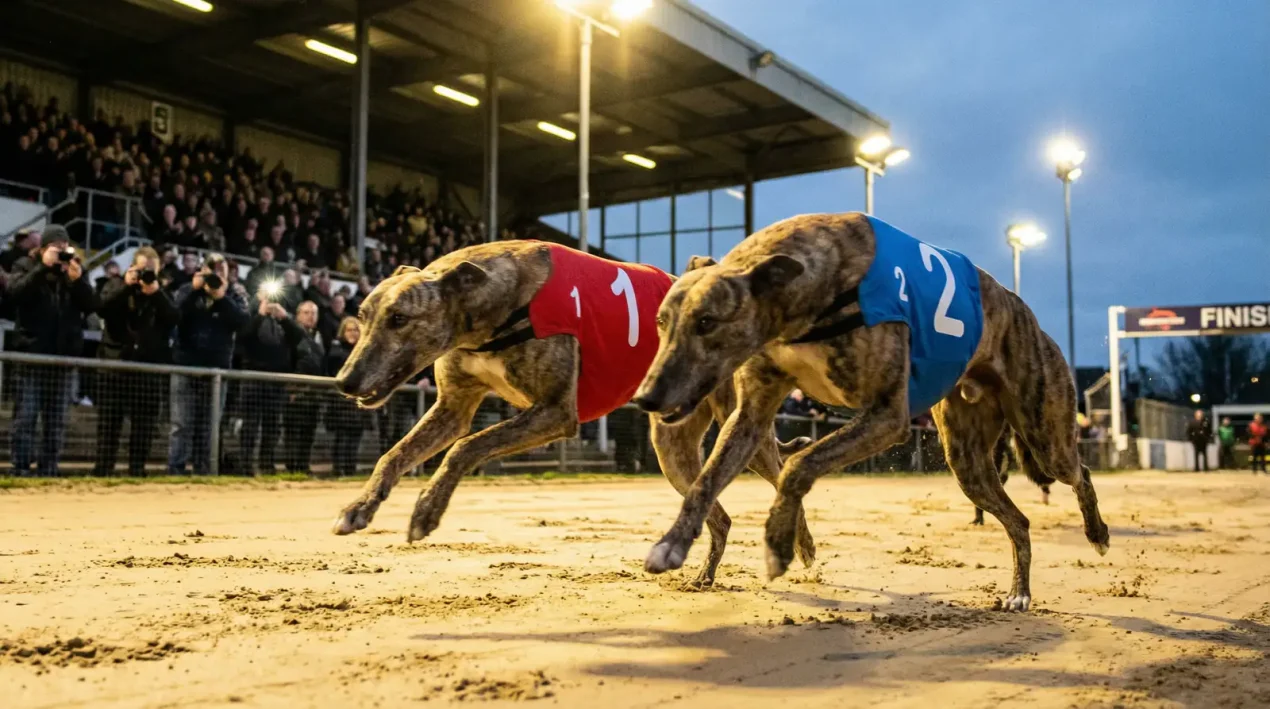
Forecast betting asks a harder question than a win bet — not just which dog will finish first, but which will finish second as well. In a twenty-runner horse race, that’s an intimidating proposition. In a six-runner greyhound race, it becomes a realistic analytical exercise. The maths is on your side: thirty possible first-second combinations from six dogs, compared to 380 from twenty. That’s why forecasts and greyhound racing have a natural affinity.
The appeal goes beyond probability. Forecast dividends in greyhound racing can be substantial relative to win odds, especially in races where the first two home are both outsiders. A dog that wins at 5/1 might produce a forecast dividend of 40/1 or more depending on the second dog, and those payouts create a different risk-reward profile from flat win betting. The trade-off is obvious — you need to be right about two dogs instead of one — but the reward compensates for that difficulty in ways that win betting at short prices rarely does.
Understanding the three main forecast types, when each is appropriate, and how to manage the cost of broader combinations is the difference between using forecasts as a structured strategy and using them as a lottery ticket with slightly better aesthetics.
How Straight Forecasts Work
A straight forecast requires you to name the first and second finishers in the exact order. Trap 3 first, trap 5 second. If they finish in that order, you collect. If trap 5 wins and trap 3 finishes second, you lose. The precision demanded is the reason straight forecasts pay significantly more than reverse forecasts — you’re making a more specific prediction, and the odds reflect that.
The dividend is calculated by the Tote pool or declared by the bookmaker based on the computer straight forecast, which uses an algorithm derived from the win odds of the two dogs involved and the number of bets placed. As a rough guide, multiply the win odds of the first dog by approximately half the win odds of the second. A 3/1 winner with a 6/1 second might produce a straight forecast dividend around 12/1 to 15/1, though the actual figure depends on pool distribution and market dynamics. The formula isn’t transparent enough to predict exact returns, but it gives a ballpark for assessing whether the risk is proportionate.
When does a straight forecast make sense? When you have a strong view on the winner and a clear secondary pick. If your analysis points firmly to one dog — strong recent form, favourable trap, dropping in grade — and you also identify a second dog with the profile to finish close but not quite win, the straight forecast captures both opinions in a single bet. The key is conviction about the order. If you think two dogs will fill the first two places but can’t separate them, a straight forecast is the wrong tool.
A practical example: a race at Romford 400 metres where the trap 1 dog has won three of its last four from box one, and the trap 4 dog has placed in its last five outings but rarely wins. Trap 1 first, trap 4 second is a straight forecast with logical support. The order isn’t arbitrary — it’s derived from the dogs’ historical tendencies to win versus place.
Reverse Forecasts: When Order Doesn’t Matter
A reverse forecast covers both possible orders: trap 3 first and trap 5 second, or trap 5 first and trap 3 second. It costs exactly twice the unit stake — you’re effectively placing two straight forecasts in one bet. The payout is the straight forecast dividend for whichever order comes in, meaning the return varies depending on which dog wins and which places.
This is the right tool when you’re confident two dogs will fill the first two spots but can’t confidently separate them. Perhaps both have strong recent form, both are well drawn, and the margin between them looks genuinely tight. Forcing an order in that situation is guesswork, and the reverse forecast removes the guesswork for the cost of doubling your stake.
The maths of value here is worth examining. If the straight forecast for one order pays 18/1 and the reverse order pays 12/1, your reverse forecast at two-pound total stake returns either eighteen or twelve pounds. The average expected return, if you judge both orders as equally likely, is fifteen pounds for a two-pound outlay. Compare that to backing either dog to win at, say, 3/1 for a one-pound stake: a three-pound return. The reverse forecast offers a materially higher payout for a similar degree of analytical confidence, which is why it occupies a useful middle ground between the precision of a straight forecast and the broader coverage of combination bets.
One caveat: if your two selections include the race favourite, the forecast dividend involving that dog first tends to be lower. The favourite winning and an outsider placing produces a smaller dividend than the outsider winning and the favourite placing. In reverse forecasts, you receive whichever dividend applies, so the asymmetry in potential payouts is worth considering before deciding the stake is worthwhile.
Combination Forecasts and Cost Management
Combination forecasts — also called permutation forecasts — let you select three or more dogs and cover every possible first-second pairing between them. Select three dogs and you cover six straight forecasts. Select four and you cover twelve. Select five and you’re at twenty permutations. The coverage is comprehensive, but the cost escalates fast.
At one pound per line, a three-dog combination forecast costs six pounds. That’s manageable. A four-dog combination costs twelve pounds, and a five-dog covers twenty lines at twenty pounds. Since greyhound races only have six runners, selecting five of six is essentially admitting you can only eliminate one dog — and paying heavily for that limited conviction. The cost needs justifying by the expected dividend, and in races with short-priced favourites, the forecast dividends for the most likely combinations may not cover a twenty-pound outlay.
The sweet spot for combination forecasts is three selections. Three dogs chosen from six means you’ve eliminated half the field, which represents a meaningful analytical position. Your cost is six units, and if any two of your three fill the first two places in any order, you collect. The question is whether the forecast dividend for the winning combination exceeds six units often enough to make the strategy profitable over time.
Cost management is the difference between using combination forecasts intelligently and using them as a scatter-gun. Before placing a combination, estimate the likely dividend range. If the two most probable dogs from your three are both short-priced, the forecast involving them might only pay 5/1 or 6/1 — which barely covers your six-unit outlay. In that case, a reverse forecast on just those two dogs at two units is the sharper play. Save the combination for races where at least one of your three selections is a longer-priced runner, because it’s the unexpected combination — an outsider finishing first or second — that produces dividends large enough to absorb the staking cost across multiple attempts.
Forecasts Reward Structural Thinking
Forecast betting rewards structural thinking — the ability to assess not just which dog is most likely to win, but how a race is likely to unfold from the traps through the bends to the line. Greyhound racing’s six-runner fields make this kind of race-reading feasible in a way that larger fields don’t, and the forecast dividends reward the extra analytical effort with payouts that win betting simply can’t match at comparable odds.
The discipline is in the staking. Straight forecasts when you have strong views on order, reverse forecasts when two dogs look inseparable, and combination forecasts only when the expected dividends justify the cost. Most punters default to combination forecasts because they cover more ground, but covering more ground at a higher price isn’t inherently better. Match the bet type to your level of conviction, and let the maths work from there.
Over time, a well-managed forecast approach targeting specific race types — competitive fields with no dominant favourite — can produce returns that flat win betting struggles to achieve. The variance is higher, the losing runs are longer, but the occasional big dividend resets the balance in a way that a string of 2/1 winners never quite does.