
In-Play Greyhound Betting
Best Greyhound Betting Sites – Bet on Greyhounds in 2026
Loading...
Contents
In-Play Greyhound Markets: Reality vs Expectation
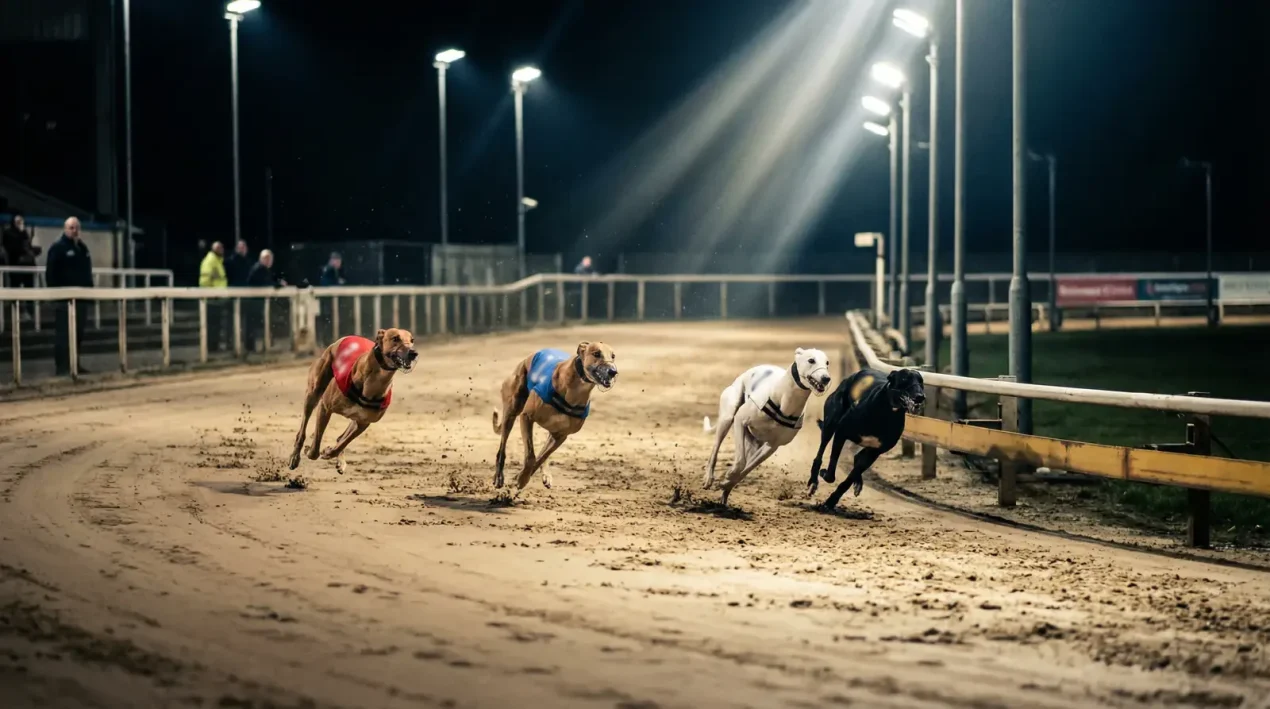
In-play betting — wagering on a race while it’s running — is a staple of horse racing and football exchange markets. In greyhound racing, it exists but operates under constraints that make it a fundamentally different proposition. A greyhound race over 480 metres lasts around 29 seconds. That’s the entire window for the market to form, for you to assess the situation, and for your bet to be matched. Anyone expecting the leisurely in-play experience of a football match is in for a sharp adjustment.
The brevity of greyhound races doesn’t make in-play betting impossible, but it does make it a specialist activity that suits a very specific type of punter. Understanding what the in-play market offers, what it doesn’t, and who it’s genuinely useful for is the difference between adding a tool to your approach and adding a way to lose money faster.
Exchange In-Running Markets for Greyhound Races
In-play greyhound betting happens almost exclusively on betting exchanges — primarily Betfair. Traditional bookmakers don’t offer in-running markets on greyhound races because the events are too short for meaningful odds adjustment between the start and finish. The exchange model works differently: it matches backers and layers in real time, with prices fluctuating based on what’s happening on the track.
When the traps open, the in-play market activates. Prices shift instantly based on which dog breaks fastest, which leads into the first bend, and which is trapped wide or slow away. A pre-race 3/1 shot that leads into the first bend might trade at 1.5 in-running. A 2/1 favourite that misses the break and gets caught in traffic could drift to 10.0 or longer within seconds. The price movements are violent and fast, reflecting the compressed timeframe of the race.
Betfair’s in-play greyhound market uses a slight delay — typically one to two seconds — between the live action and the displayed prices. This delay is designed to prevent latency exploitation but also means that by the time you see a price and click to back or lay, the situation on the track may already have changed. In a 29-second race, a two-second delay represents nearly 7% of the entire event. The dog you’re trying to back at 2.0 might be heading for trouble at the second bend by the time your bet is processed.
Speed of Races, Latency, and Thin Liquidity
Three structural challenges define in-play greyhound betting, and all of them work against the casual participant.
Speed is the obvious one. A horse race over a mile and a half gives you two minutes or more of in-play action, with multiple phases — early pace, mid-race positioning, the final furlong — where you can assess and react. A greyhound sprint gives you no such luxury. The first bend arrives within four or five seconds of the traps opening, and by the time the field is into the back straight, the race is more than half over. Decisions must be made instantly, based on visual information that’s already slightly outdated by the time it reaches your screen.
Latency compounds the speed problem. Even with a fast internet connection and a live stream with minimal broadcast delay, there’s a gap between what’s happening at the track and what you see. Add the exchange’s built-in delay, and you’re making decisions based on information that may be three to four seconds old. In a twenty-nine-second race, that’s an eternity. Professional in-play traders who succeed in this market typically use low-latency data feeds and automated or semi-automated systems to reduce the reaction gap. Manual clicking against these participants is, in most cases, a losing proposition.
Liquidity is the third challenge. In-play greyhound markets on Betfair are significantly thinner than horse racing in-running markets. At a routine BAGS meeting, the amount of money available to match at any given price during the race may be modest — sometimes only a few pounds at each price point. This means large bets can’t be placed without moving the market, and even modest bets may not be fully matched at the intended price. For popular evening meetings, liquidity improves, but it rarely approaches the depth of a handicap horse race at a major festival.
These three constraints interact in ways that amplify each other. Thin liquidity means prices jump in larger increments. Larger price jumps combined with latency mean you’re more likely to miss the price you intended. And the speed of the race means there’s no time to wait for a better opportunity — by the time you reassess, the race may be over. The combined effect is that the in-play greyhound market is structurally hostile to manual traders in a way that pre-race markets are not.
Who In-Play Suits and Who Should Avoid It
In-play greyhound betting suits two specific types of punter. The first is the experienced exchange trader who has invested in low-latency tools and understands the mechanics of in-running market dynamics. These individuals aren’t gambling on individual races — they’re trading price movements across a portfolio of events, and their edge comes from speed of execution and systematic processes rather than race-reading ability.
The second group is punters who use in-play selectively for hedging. If you’ve backed a dog pre-race and it breaks well, leading into the first bend, you can lay it in-play at a shorter price to lock in a profit regardless of the outcome. This green-up strategy doesn’t require you to predict the finish — it requires you to react to the first few seconds of the race and execute a trade while the market is still active. It’s a risk-management tool, not a standalone betting strategy, and it works best when you’ve backed a front-runner whose early-speed profile makes it likely to lead into the first bend.
A third, more limited use case is closing out losing positions. If you’ve laid a dog pre-race and it breaks quickly into the lead, you can back it in-play at the shortened price to cap your loss rather than letting the full liability ride. This is the defensive mirror of the green-up — instead of locking in profit, you’re limiting damage. Both approaches require quick decision-making and reliable execution, but they add flexibility to your pre-race positions that pure bookmaker betting doesn’t offer.
In-play greyhound betting is not suited to casual punters watching races through bookmaker streams with standard broadband connections. The combination of broadcast delay, exchange delay, and manual execution speed means you’ll consistently be behind the market. The prices you see will often be stale, the prices you try to take will frequently have moved, and the overall experience will feel like you’re always one step behind what’s actually happening. If that description sounds frustrating, it should — because that’s the reality for the majority of people who attempt in-play greyhound betting without the right infrastructure.
In-Play Is a Specialist’s Game
The in-play greyhound market exists, and money is made in it — but not by the people who stumble into it hoping for quick profits from watching a live stream. It’s dominated by technology-assisted traders and experienced exchange users who have built systems specifically for the format. For everyone else, the pre-race market is where greyhound betting value lives. Master that first. If you eventually want to explore in-play, treat it as a separate discipline that requires separate tools, separate skills, and a realistic assessment of whether you can compete with the participants already in the market.