
Greyhound Track Bias Explained
Best Greyhound Betting Sites – Bet on Greyhounds in 2026
Loading...
Contents
Track Bias as a Hidden Variable
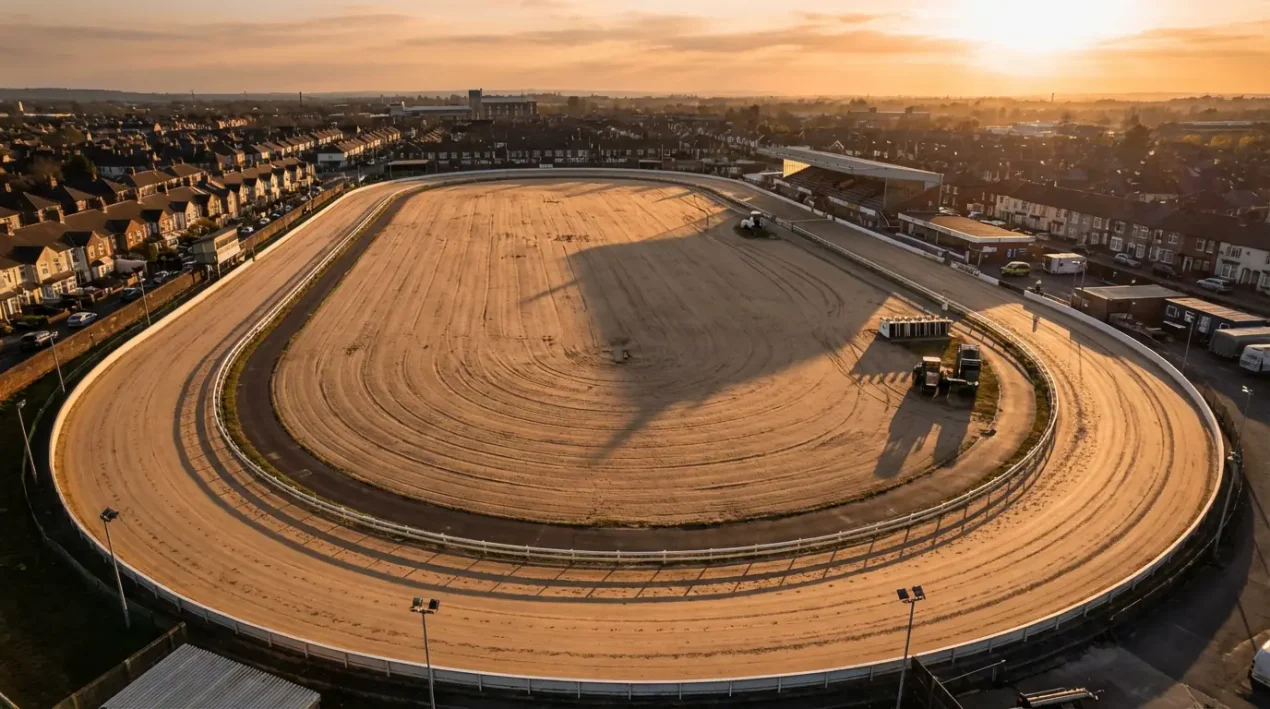
Every greyhound track has a personality. Some favour inside runners. Some reward wide-running dogs more than the national averages suggest. Others develop pace biases where front-runners or closers hold a structural advantage that form alone doesn’t explain. This is track bias — a pattern in race outcomes driven by the physical characteristics of the circuit rather than the ability of the dogs running on it.
Track bias matters because it operates underneath the form data that most punters rely on. A dog might finish fourth at Romford not because it lacks ability but because the track’s geometry punished its running style. Move the same dog to a venue whose bias suits wide runners, and the result can be completely different. Punters who understand track bias see context where others see only finishing positions.
Rail Bias, Wide Bias, and Pace Bias
Rail bias is the most common form. At most UK tracks, the inside traps — particularly traps 1 and 2 — win more often than statistical expectation. This happens because the first bend at British circuits turns left, giving inside-drawn dogs the shortest path to the rail and the tightest racing line through the turn. The strength of this bias varies enormously from track to track. At tight, compact venues like Romford, the inside bias is severe over sprint distances. At wider circuits with longer straights, the bias softens because dogs have more time and space to find position before the bend arrives.
Wide bias is rarer but does exist, typically at tracks where the geometry of specific bends gives outside runners a cleaner passage. This can happen when the first bend opens out on the approach, allowing trap 5 and 6 dogs to maintain speed without being forced wide. It can also emerge when rail-side interference is common — if the inside dogs consistently bump at the first bend, the wider-drawn runners benefit from cleaner racing. Monmore Green, for example, has historically shown a weaker inside bias than many comparable tracks because its bend configuration gives middle and outside traps a more competitive path.
Pace bias refers to whether a track systematically favours front-runners or closers. At venues with short runs from the traps to the first bend, the dog that leads into the turn rarely gets caught — there simply isn’t enough race left for a closer to make up the ground. This creates a pace bias towards early speed. At tracks with longer circuits, multiple bends and extended home straights, the run-home section gives closers a genuine window to overhaul leaders who have set fast fractions. Towcester, with its demanding course and gradient, historically rewards stamina and late pace more than most UK tracks.
These three types of bias aren’t mutually exclusive. A track can favour inside runners and front-runners simultaneously — in fact, that combination is the most common pattern in UK greyhound racing. But the relative strength of each bias varies, and understanding the specific profile of the tracks you bet on is what turns general knowledge into actionable insight.
How to Spot Bias from Recent Results
Detecting track bias requires data, not intuition. The simplest method is to compile the winning trap numbers from the last fifty to one hundred races at a specific track and distance. If trap 1 has won 25% of those races against an expected rate of 16.7%, the inside bias is pronounced. If traps 5 and 6 combined have won more than their expected share, something about the circuit is helping wide runners.
Go further by tracking where the winner was positioned at the first bend. If 70% of recent winners led at the first bend or sat second, the track has a pace bias towards early speed. If a meaningful proportion of winners came from behind — fourth or worse at the first turn — the track allows closers to compete, which changes how you weight early sectional times in your analysis.
Several free and subscription data services publish running track-bias statistics for GBGB venues, updated after each meeting. These services do the compilation work for you and present the data in formats that allow quick comparison across traps, distances and time periods. If you’re serious about using track bias in your betting, these tools save considerable time compared to manual data collection.
One critical detail: sample size matters. Fifty races at a given distance might show trap 4 winning 24% of the time, but with only fifty data points, the margin of error is wide enough that the result could be noise rather than signal. Look for patterns backed by at least one hundred races before treating them as reliable. Below that threshold, treat the data as indicative rather than conclusive, and combine it with visual observation from watching races at the venue.
Why Bias Changes and How to Stay Current
Track bias is not permanent. The same venue can show different bias patterns from one season to the next, and sometimes from one month to the next. Several factors drive these shifts.
Surface maintenance is the most common cause. Greyhound tracks are resurfaced, re-sanded and re-graded periodically. After maintenance work, the running characteristics of the circuit can change — a track that previously favoured inside runners might play more fairly if the surface on the inside rail has been altered. Rail adjustments — moving the running rail inward or outward by a few metres — change the geometry of the bends and can shift trap bias significantly.
Weather plays a role, particularly for sand-based surfaces. Heavy rain can soften the going and slow early pace, reducing the front-runner advantage. Prolonged dry spells can bake the surface hard and fast, amplifying inside bias because the rail line becomes the quickest path. Tracks with all-weather surfaces are less affected, but even they show variation in running characteristics across seasons.
The practical implication is that bias data has a shelf life. Statistics from six months ago may no longer reflect current conditions. Weight recent data more heavily than older data, and reset your assumptions after any known surface or rail change at the track. If you follow a track closely — watching races, monitoring results — you’ll often notice shifts before the aggregate data catches up. A sudden cluster of wide-trap winners after weeks of inside dominance is a signal worth acting on, even before the percentages formally adjust.
Bias Is a Sliding Scale, Not a Constant
Thinking of track bias as a fixed attribute — “Romford favours trap 1” — is an oversimplification that will eventually cost you. Bias exists on a spectrum that shifts with conditions, maintenance and time. The inside advantage at any given track might be strong in January and mild by April. A pace bias towards front-runners might weaken after a rail change that opens up the first bend.
The punters who use track bias most effectively treat it as a living data set, not a static rule. They check the numbers regularly, watch for anomalies, and adjust their analysis when the evidence changes. That adaptability is what separates systematic bettors from those who learned one fact about a track three years ago and never updated it.