
Greyhound Weight Changes
Best Greyhound Betting Sites – Bet on Greyhounds in 2026
Loading...
Contents
Weight as the Overlooked Form Indicator
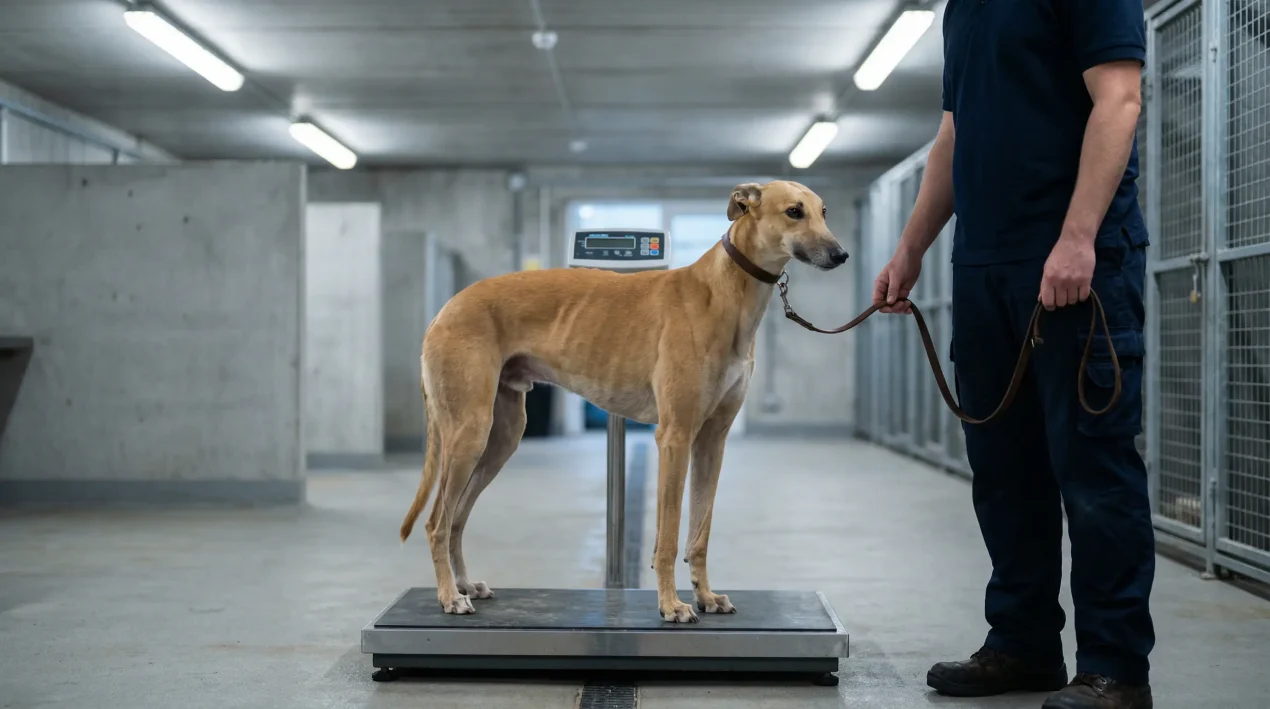
Every greyhound is weighed before every race, and the figure is published on the race card alongside form, trap draw and trainer details. Most punters glance at it and move on. The ones who pause to compare it with the dog’s recent racing weight have access to a fitness indicator that is surprisingly informative — and almost universally underused.
Weight doesn’t determine the outcome of a race. A dog half a kilo heavier than last week can still win comfortably. But weight changes, in context, can signal shifts in fitness, preparation and readiness that other form indicators take longer to reveal. A dog that has gained weight steadily over three runs is telling you something about its current condition that finishing positions alone may not yet reflect.
What’s Normal and What’s a Flag
Greyhounds in active racing typically weigh between 26 and 36 kilograms, depending on the dog’s build, breed line and sex. Males tend to be heavier than females, and staying-distance dogs often carry more frame than sprinters. The absolute number matters less than the fluctuation — how much a dog’s weight changes from run to run is the diagnostic signal.
Normal race-to-race variation is around 0.2 to 0.5 kilograms. Dogs aren’t machines, and minor fluctuations in hydration, meal timing and bodily function produce small weight swings that have no bearing on performance. A dog weighing 30.2 kilograms last week and 30.5 this week is within the expected range, and reading anything into that half-kilo difference would be overinterpretation.
The flag goes up at around 0.7 to 1.0 kilograms of change in either direction. A gain of a kilogram suggests the dog may be carrying excess condition — less sharp, potentially slower to the first bend, and more likely to fade in the closing stages. A loss of a kilogram or more can indicate overtraining, stress, or a health issue that hasn’t yet manifested in results but is affecting the dog’s physical state. Either way, a change of this magnitude deserves attention.
Beyond a kilogram, the shift is significant enough to affect expectations materially. A dog that raced at 31.0 kilograms two weeks ago and weighs in at 32.5 today has undergone a notable physical change. Whether the weight gain is muscle, fat, or fluid retention isn’t knowable from the card, but the performance implication is the same: this is not the same animal in the same condition. Approach it with more caution than its recent form alone would suggest.
Weight Up vs Weight Down: Different Signals
Weight gain and weight loss carry different implications, and collapsing them into a single “watch the weight” rule loses important nuance.
Weight gain in a racing greyhound most commonly signals reduced fitness. The dog is carrying more than its racing-lean optimum, which can affect early speed, stamina, and the sharpness of its muscular response. This is particularly relevant for dogs returning from a break. A dog that hasn’t raced for three or four weeks and comes back a kilogram heavier may be underprepared — the trainer has kept it fed but hasn’t maintained its race fitness to the same peak. First run back at increased weight is a cautionary scenario, not an automatic dismissal, but one that should temper your confidence.
Weight gain can also, in rarer cases, reflect natural maturation. Younger dogs — those in their first or second racing season — sometimes put on weight as they physically develop, and this added bulk can translate into more power rather than less fitness. Distinguishing growth from poor condition requires familiarity with the dog’s trajectory over multiple runs, which is another argument for specialising in a small number of tracks where you see the same dogs repeatedly.
Weight loss is a sharper alarm. A dog losing 0.7 kilograms or more between runs might be stressed, unwell, or undertrained. Trainers who struggle with a dog’s feeding or who are managing a minor health issue may present a dog at below its natural weight. The performance risk here is different from the gain scenario: instead of sluggishness, you’re looking at potential weakness — less power, less resilience, and a higher chance of fading under pressure. Dogs that have dropped weight over consecutive races deserve particular caution, as the trend suggests an ongoing issue rather than a one-off fluctuation.
Incorporating Weight Into Your Selection Process
Weight data works best as a confirmatory signal rather than a primary selection tool. If your form analysis identifies a dog as a strong contender and its weight is stable or at its recent average, the weight data supports your assessment. If that same dog has gained a kilogram since its last run, the weight introduces doubt that should lower your confidence — not necessarily eliminate the selection, but adjust the price at which you’re willing to bet.
Build weight tracking into your regular form study by noting each dog’s weight at its last three or four runs. Most race card providers display the current weight and the previous weight, but seeing the trend over several runs requires you to record it yourself. A simple note next to each dog — “31.0, 30.8, 31.2, 31.0” — takes seconds and reveals stability or drift at a glance.
When two dogs in a race look evenly matched on form, draw and grade, check their weight trends. The one racing at a consistent weight is sending a signal of stable preparation. The one that has gained or lost materially since its last run is introducing an uncertainty that tips the balance away from it. In tight races where the form says “too close to call,” weight data can provide the marginal edge that makes a decision possible.
For dogs returning from a break of two weeks or more, weight deserves particular scrutiny. A dog coming back at its racing weight suggests careful maintenance during the layoff. One returning noticeably heavier may need a run or two to sharpen up, making its first race back a less attractive betting proposition regardless of how strong its earlier form was. The first-run-back-heavy scenario is one of the more reliable negative indicators in greyhound racing, and it’s easy to spot if you check the weigh-in column before every bet.
Similarly, keep an eye on weight trends in dogs that run frequently — two or three times in a ten-day period. Greyhounds racing on tight schedules can lose weight through the demands of repeated competition, and a dog that started a sequence at 30.5 kilograms but is now racing at 29.8 may be feeling the physical toll. Even if results have held up so far, the declining weight suggests the dog is being pushed hard and may underperform relative to its recent form.
Weight Is One Data Point, Not the Verdict
A dog can gain a kilo and win by five lengths. Another can weigh in perfectly and trail the field. Weight data is probabilistic, not deterministic — it shifts the odds of a good performance in one direction or another without guaranteeing anything. The value lies in combining it with everything else you know about the dog, the race and the track, and using the complete picture to make a more informed assessment than the punter who never looks at the weigh-in column at all.