
Greyhound Bet Types Explained: Win, Forecast, Tricast and More
Best Greyhound Betting Sites – Bet on Greyhounds in 2026
Loading...
Contents
Six Runners, Dozens of Ways to Bet on Them
The beauty of a six-dog field is simplicity — the range of bets available is anything but. On the surface, greyhound racing looks straightforward: six traps, one lure, one winner. But beneath that clean structure sits a catalogue of bet types that lets you express almost any opinion about a race — from picking the outright winner to predicting the exact finishing order of the first three dogs, combining multiple races into a single wager, or simply backing a dog to finish in the top two.
Understanding these bet types isn’t optional for serious punters. It’s foundational. The right bet type doesn’t just change your payout — it changes whether a race is worth betting on at all. A dog you fancy to finish in the top two but not win outright is a poor win bet and a potentially excellent each-way or place bet. A race where you can separate two dogs from the field but can’t confidently pick between them might be ideal for a reverse forecast. The skill isn’t just in reading the form. It’s in matching your analysis to the bet type that extracts the most value from it.
This guide covers every standard bet type available on UK greyhound racing, from the simplest win bet to combination tricasts and specialty markets. For each, we’ll explain the mechanics, the maths where it matters, and — most importantly — when the bet type actually makes sense to use. Because using the wrong bet type on the right dog is almost as costly as backing the wrong dog entirely.
Win and Place Bets
Win is binary. Place is a safety net. Know which you need before the traps open. A win bet is the simplest transaction in greyhound racing: you pick one dog, and if it finishes first, you collect at the advertised odds. If it finishes anywhere else, you lose your stake. There’s no ambiguity, no partial payout, no consolation. It’s the purest expression of confidence in a single runner.
The appeal of win betting is its directness. The odds reflect the probability of one specific outcome — first place — and the payout is proportional. If you back a dog at 5/1 with a ten-pound stake and it wins, you receive fifty pounds in profit plus your stake back. The maths never gets more complicated than that, which is partly why win bets remain the most popular bet type in greyhound racing.
Place betting works differently. Instead of needing your dog to win, it needs to finish in one of the designated place positions — typically first or second in a standard six-runner greyhound race (Timeform — How to Read a Racecard). The trade-off is obvious: you’re more likely to collect, but the odds are significantly lower. Place odds are usually calculated at a fraction of the win odds (commonly a quarter in six-runner fields), which means a dog at 4/1 for the win would pay roughly evens for a place.
The decision between win and place should be driven by your assessment of the race, not by temperament. If you believe a dog is the most likely winner in the field and the win odds represent value, back it to win. If you think a dog has a strong chance of finishing in the top two but the win price doesn’t justify the risk — perhaps it has a tricky trap draw or a slow-away tendency — a place bet might be the sharper play. Too many punters use place betting as a default option because they lack conviction. That’s not strategy; that’s indecision dressed as caution.
In six-runner greyhound fields, place betting is inherently more generous than in horse racing, where fields of twelve or more runners dilute the place probability. With only six dogs, a place bet covers a third of the field. That mathematical reality makes place betting in greyhounds a legitimate strategic tool rather than a fallback for the nervous.
Each-Way Betting on Greyhounds
Each-way is two bets in one, and understanding the maths is non-negotiable. An each-way bet consists of two separate stakes of equal size: one on the dog to win and one on the dog to place. If the dog wins, both parts pay out — the win part at full odds and the place part at a fraction of the win odds. If the dog finishes in a place position but doesn’t win, you lose the win stake but collect on the place portion. If the dog finishes outside the places, you lose both stakes.
The critical thing to understand is that an each-way bet costs double your quoted stake. If you place a five-pound each-way bet, you’re risking ten pounds — five on the win and five on the place. This is where many casual punters trip up. They place what they think is a five-pound bet and discover their account has been debited ten. Always calculate each-way bets at double the unit stake.
The place fraction in standard greyhound racing is one quarter of the win odds, and the places paid are first and second in a six-runner field. So a ten-pound each-way bet on a dog at 8/1 breaks down like this: ten pounds on the win at 8/1 and ten pounds on the place at 2/1 (which is 8/1 divided by 4). If the dog wins, you collect eighty pounds from the win part and twenty pounds from the place part, totalling one hundred pounds profit. If it finishes second, you lose the ten-pound win stake but collect twenty pounds from the place part, netting ten pounds profit overall.
Place Terms by Field Size
Terms shift with the field — six runners means two places at a quarter odds. In standard UK greyhound racing, virtually every race features exactly six runners, so the place terms are consistent: first and second at one quarter the win odds. This predictability is actually an advantage for bettors — unlike horse racing, where place terms vary dramatically with field size and each-way value fluctuates accordingly, greyhound each-way terms are stable and calculable in advance.
There are occasional exceptions. Handicap races or special events might feature more than six runners, in which case the place terms may extend to three places. Some bookmakers also offer enhanced each-way terms as promotional offers — paying three places instead of two, or offering a third of the odds rather than a quarter. When these promotions appear, they can shift the value equation significantly in the punter’s favour, so it pays to be aware of them.
For the vast majority of races, though, the calculation is fixed: two places, quarter odds. Commit that to memory and you’ll never be surprised by your payout.
When Each-Way Offers Genuine Value
The sweet spot for each-way is a runner with solid place credentials at 5/1 or longer. Each-way betting has a mathematical tipping point, and it revolves around the win price. At short odds — say, evens or 2/1 — the place part of an each-way bet returns so little that it barely cushions the blow of a losing win bet. The combined return simply doesn’t justify the double stake.
The numbers start to work in your favour around the 5/1 mark. At 5/1, the place part pays 5/4, which means a placed finish returns a meaningful profit even when the win bet loses. At 8/1 and above, each-way starts to become genuinely attractive, particularly on dogs that you rate as strong place candidates but uncertain winners — perhaps because they’re consistent second-place finishers, or because they tend to finish strongly but struggle to get to the front early enough to win.
The worst each-way bets are on short-priced favourites. Backing a 6/4 shot each-way means your place part pays roughly 3/8 — fractionally more than a third of your stake. If the dog finishes second, you’re still losing money overall. Reserve each-way for medium-to-long-priced runners where the place fraction generates a genuine return, and where your form analysis suggests the dog has a better chance of placing than the market implies.
Forecast and Reverse Forecast Bets
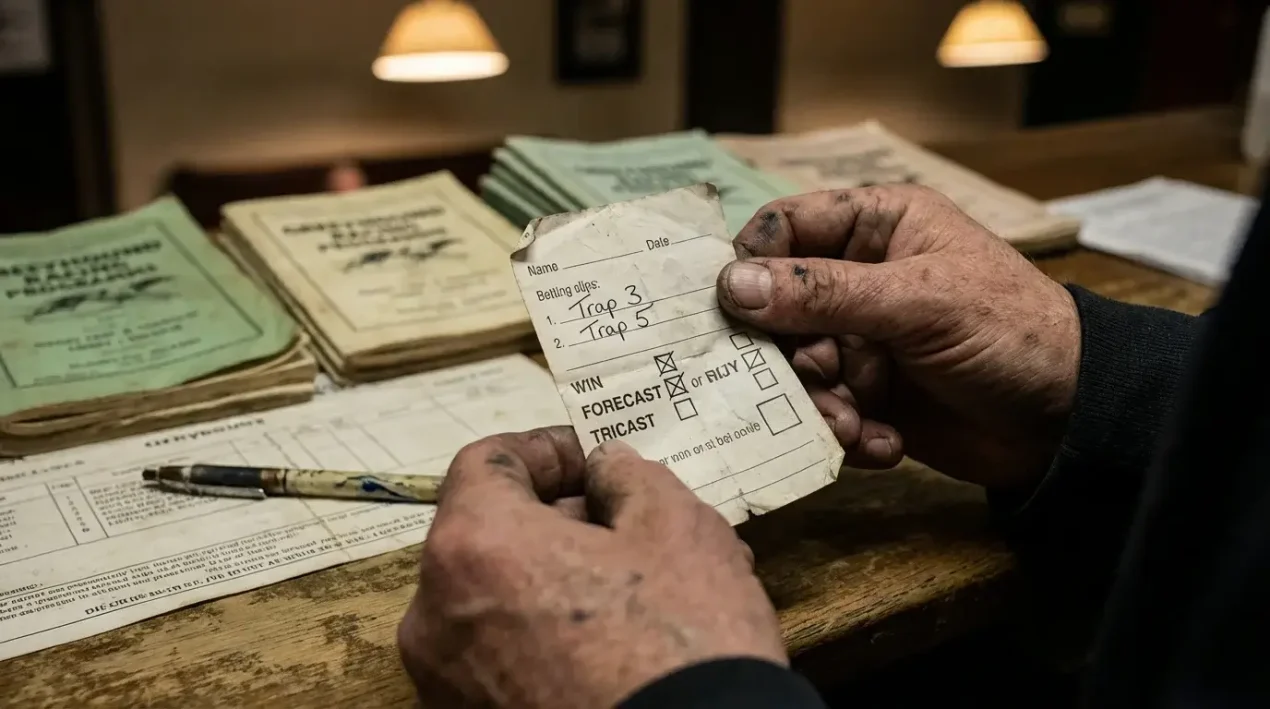
Forecasts turn a six-dog race into a 30-permutation puzzle. A forecast bet requires you to predict the first and second-place finishers in the correct order. In a six-runner greyhound race, there are thirty possible first-and-second combinations (six dogs multiplied by five remaining dogs), which means the odds of randomly hitting a forecast are significantly longer than a simple win bet — and the payouts reflect that.
A straight forecast is the most precise version: you name dog A to finish first and dog B to finish second, in that exact order. If they finish first and second but in the reverse order, you lose. The payout on a straight forecast is determined by the Computer Straight Forecast (CSF) calculation, which is based on the starting prices of the two dogs. There’s no fixed odds display for forecasts before the race — the dividend is declared after the result. This makes forecasts inherently harder to assess pre-race, but the potential returns are substantial, particularly when the two dogs that finish first and second are both at longer prices.
A reverse forecast covers both orderings: dog A first and dog B second, or dog B first and dog A second. It costs double a straight forecast because it’s effectively two bets, but it removes the need to predict the exact order. This is a useful option when you’ve identified two dogs that you believe will dominate the race but can’t confidently determine which one will finish in front.
Combination forecasts extend the concept further. If you fancy three dogs to fill the first two positions, a combination forecast covers all six possible first-and-second permutations involving those three runners. The cost scales accordingly — six units for a three-dog combination. Four dogs would generate twelve permutations and cost twelve units. The more dogs you include, the wider your coverage, but the higher the outlay and the lower your return on investment if the favourites fill the places.
Forecasts are particularly well suited to greyhound racing because the small field size keeps the permutation count manageable. In a six-runner field, even a three-dog combination forecast is only six bets. In a twelve-runner horse race, the same approach would require sixty-six bets. This structural advantage is one reason why forecast betting is proportionally more popular in greyhound racing than in any other UK betting medium.
The key to profitable forecast betting is identifying races where you can confidently eliminate three or four runners from contention, leaving two or three genuine contenders. The fewer dogs you need to include, the lower your outlay and the more likely you are to show a profit over time.
Tricast Betting: First, Second, Third in Order
Tricasts are high-variance, high-reward — treat them as controlled speculation. A tricast requires you to predict the first, second, and third finishers in exact order. In a six-runner field, there are 120 possible permutations for the first three positions, which gives you a sense of why tricast dividends can be eye-wateringly large. A straight tricast involving three outsiders can return several hundred pounds from a one-pound stake.
Like forecasts, tricast dividends are calculated after the race using the Computer Tricast formula, based on the starting prices of the three placed dogs. There are no pre-race fixed odds for tricasts — you’re betting on an outcome and accepting whatever the market-derived dividend turns out to be. This introduces an element of uncertainty, but it also means that occasional windfall returns are built into the bet type’s DNA.
The practical approach to tricasts in greyhound racing mirrors forecasts but with an additional layer of complexity. A straight tricast — naming the exact first, second, and third in order — is the cheapest option at one unit stake, but the hardest to land. A combination tricast covering three named dogs in any finishing order costs six units (three factorial). Including a fourth dog in your combination tricast expands coverage to twenty-four permutations and costs twenty-four units, which starts to eat into the profitability unless the dividend is large.
Smart tricast betting in greyhounds comes down to race selection. The best tricast opportunities arise in races where the form clearly separates three dogs from the rest of the field, but the order among those three is genuinely uncertain. Graded races with one obvious class dropper, one consistent performer, and one dog with strong early pace often fit this profile. Avoid tricasts in open races or races with evenly matched fields — the increased randomness works against the precision that tricast betting demands.
Set a clear budget for tricast betting and treat it as a separate strand of your wagering. Tricast returns are lumpy by nature — long losing runs punctuated by significant paydays. If you mix tricast stakes with your regular betting bankroll, the variance will distort your results and make it harder to assess your overall performance accurately.
Accumulators and Multiple Bets
Accumulators are the bookmaker’s best friend unless you build them with discipline. An accumulator — or acca — combines selections from multiple races into a single bet, with the winnings from each successful selection rolling onto the next. A four-fold accumulator on greyhounds at 3/1, 2/1, 5/1, and 4/1 would return a staggering sum from a small stake, which is precisely why accumulators are the most popular bet type among recreational punters and the most profitable product for bookmakers.
The maths explains why. Each additional leg in an accumulator multiplies your potential return but also multiplies the improbability of the overall bet landing. A double (two selections) is reasonable. A treble (three) is ambitious. A four-fold or five-fold is a long shot. Beyond that, you’re essentially buying a lottery ticket with extra steps. The bookmaker’s margin compounds with each additional leg, meaning the true probability of winning a six-fold accumulator is meaningfully lower than the odds suggest.
That said, accumulators have a place in a disciplined betting approach if used sparingly and correctly. The key is limiting the number of legs and only including selections where you have genuine conviction based on form analysis. A carefully constructed double or treble on three strongly fancied dogs, each with solid recent form, reasonable trap draws, and competitive grades, is a legitimate betting strategy. What kills accumulator bettors is the temptation to add marginal legs because the overall odds look more attractive — adding a dog you haven’t properly assessed simply because it bumps the potential return from fifty pounds to two hundred.
Greyhound accumulators carry an additional structural risk that horse racing accas don’t: the speed of the programme. On a busy evening card, twelve races can be completed in under two hours. If you’ve placed a six-fold across the card, the entire bet resolves in a single session. This creates a psychological trap where losing accas early in the evening lead to impulsive replacements — chasing the loss with increasingly reckless combinations. The speed of greyhound racing and accumulators is a dangerous cocktail if you don’t have rules in place.
A practical rule for accumulator betting on greyhounds: limit yourself to doubles and trebles, restrict your selections to dogs you’ve assessed individually as value bets in their own right, and never stake more than you’d be comfortable losing on a single win bet. If a selection isn’t worth backing individually, it has no business being in an accumulator.
Related bet types include Trixies (three selections in four bets: three doubles and a treble), Patents (three selections in seven bets: three singles, three doubles, and a treble), and Lucky 15s (four selections in fifteen bets). These full-cover multiple bets offer partial returns if only some of your selections win, but the increased number of unit stakes means the outlay is significantly higher. They’re worth understanding, but for most greyhound bettors, clean doubles and trebles remain the sharpest approach.
Specialty Bets: Daily Double, Quinella, Trap Challenge
Beyond the standard menu, bookmakers serve a range of specialty markets that can add variety to your greyhound betting. These aren’t core strategy tools for most punters, but understanding them ensures you recognise an opportunity when one appears — and avoid getting drawn into a bet that sounds more appealing than it actually is.
The daily double is a pool bet offered by the tote where you pick the winners of two nominated races on the same card. Unlike a standard double placed with a bookmaker, the daily double pays out from a pool of all stakes placed into that market, with the dividend determined by how many winning tickets there are. When favourites win both legs, the dividend is small. When outsiders win, the dividend can be enormous. The daily double is essentially a bet on whether you can identify value in two races simultaneously, with the payout scaled to the difficulty of the outcome.
A quinella requires you to pick the first two finishers in a race in any order. It’s functionally identical to a reverse forecast but operates as a pool bet rather than a fixed-odds wager. The quinella dividend fluctuates based on the volume and distribution of stakes in the pool. In practice, quinellas and reverse forecasts often produce similar returns, but the pool-based mechanism of the quinella occasionally delivers better value when public money is concentrated on a different combination.
Trap challenge bets — sometimes called “trap specials” — involve picking the most successful trap number across an entire meeting. Bookmakers price up each trap (1 through 6) based on how many wins they expect it to produce during the card. If you believe a particular track has a strong inside-trap bias, backing trap 1 for the meeting can be a way to express that opinion without needing to assess each race individually. The trap challenge is one of the few bet types in greyhound racing that rewards track-level knowledge rather than individual race analysis.
Other specialty markets include match bets (which dog finishes higher out of two named runners, regardless of overall finishing position), trainer specials (which kennel produces the most winners on the card), and distance bets on specific races (the winning margin in lengths). Match bets deserve particular attention. When you have a strong opinion about two specific dogs in a race but limited confidence in either winning outright, a match bet removes the rest of the field from the equation. It’s a cleaner, more precise way to express a partial view.
The common thread across all specialty bets is that they reward specific knowledge rather than general form reading. If you understand trap bias data, the trap challenge has value. If you know a trainer’s record at a particular track, a trainer special might offer an edge. If you can separate two dogs from the rest but can’t pick the winner, a match bet is the right vehicle. The bet type should always serve the analysis, not the other way around.
Match the Bet to the Edge
The smartest punters don’t just find the right dog — they find the right bet type. That principle connects every section of this guide. Win, place, each-way, forecast, tricast, accumulator, specialty — each is a different tool, and using the wrong one doesn’t just reduce your return, it actively works against your analysis.
Think of it this way. If your form reading tells you two dogs will fight out the finish but you can’t split them, a win bet on either is a coin flip with the bookmaker’s margin stacked against you. A reverse forecast on the pair is a surgical strike that aligns with exactly what you know. If your analysis identifies a consistent placer at a big price, an each-way bet captures value that a win bet misses. If you’ve identified a three-dog race within a six-dog field, a combination tricast might be the sharpest expression of that view.
The discipline here is straightforward but rarely followed: decide what you know about the race first, then select the bet type that matches. Most punters do it in reverse — they decide they want a win bet or an accumulator and then look for selections to fill the structure. That’s backwards. The analysis should always lead, and the bet type should follow.
Greyhound racing’s six-runner fields make this matching process simpler than in any other racing medium. Fewer runners mean fewer permutations, more predictable place terms, and a tighter set of plausible outcomes. Use that structural advantage. Learn the maths behind each bet type, understand when each one offers genuine value, and you’ll find that the right bet on the right dog at the right price is a combination that the bookmakers don’t enjoy paying out on.